

Before settling on a particular pool shape or style, consider how your backyard functions and what you want from your new pool.
Backyard size and layout: The available space, property boundaries, existing landscaping, and proximity to your home all influence which pool designs will work best. It’s also important to identify any existing utility easements or other easements on your property, as these may restrict where a pool or other structures can be built. A smaller backyard may benefit from a compact geometric pool, while a larger property may accommodate an expansive freeform design with additional outdoor living features. Before finalizing your design, your pool builder should consider applicable property setbacks, easement restrictions, underground utilities, and other site-specific requirements.
How you plan to use your pool: Do you want a place for children to play, a relaxing retreat, a space to entertain guests, or an area for exercise? Your primary goals will help determine the pool’s shape, depth, layout, and features.
Your home’s architectural style: A well-designed pool should complement your home rather than compete with it. Clean lines often pair well with contemporary architecture, while flowing shapes can complement traditional homes and natural landscaping.
Desired features: Consider whether you want an attached spa, tanning ledge, waterfall, beach entry, swim-up seating, or other custom features. Planning these elements early helps create a cohesive design.
Maintenance and long-term use: Different layouts and features can affect cleaning requirements, equipment needs, and ongoing maintenance. Consider how much time you want to spend maintaining your pool alongside how you want to enjoy it.
6 Swimming Pool Designs to Consider for Your Backyard
There isn’t one pool design that works for every homeowner. These six options offer different advantages depending on your available space, personal style, and intended use.
1. Geometric Pools: Best for Modern, Structured Backyards
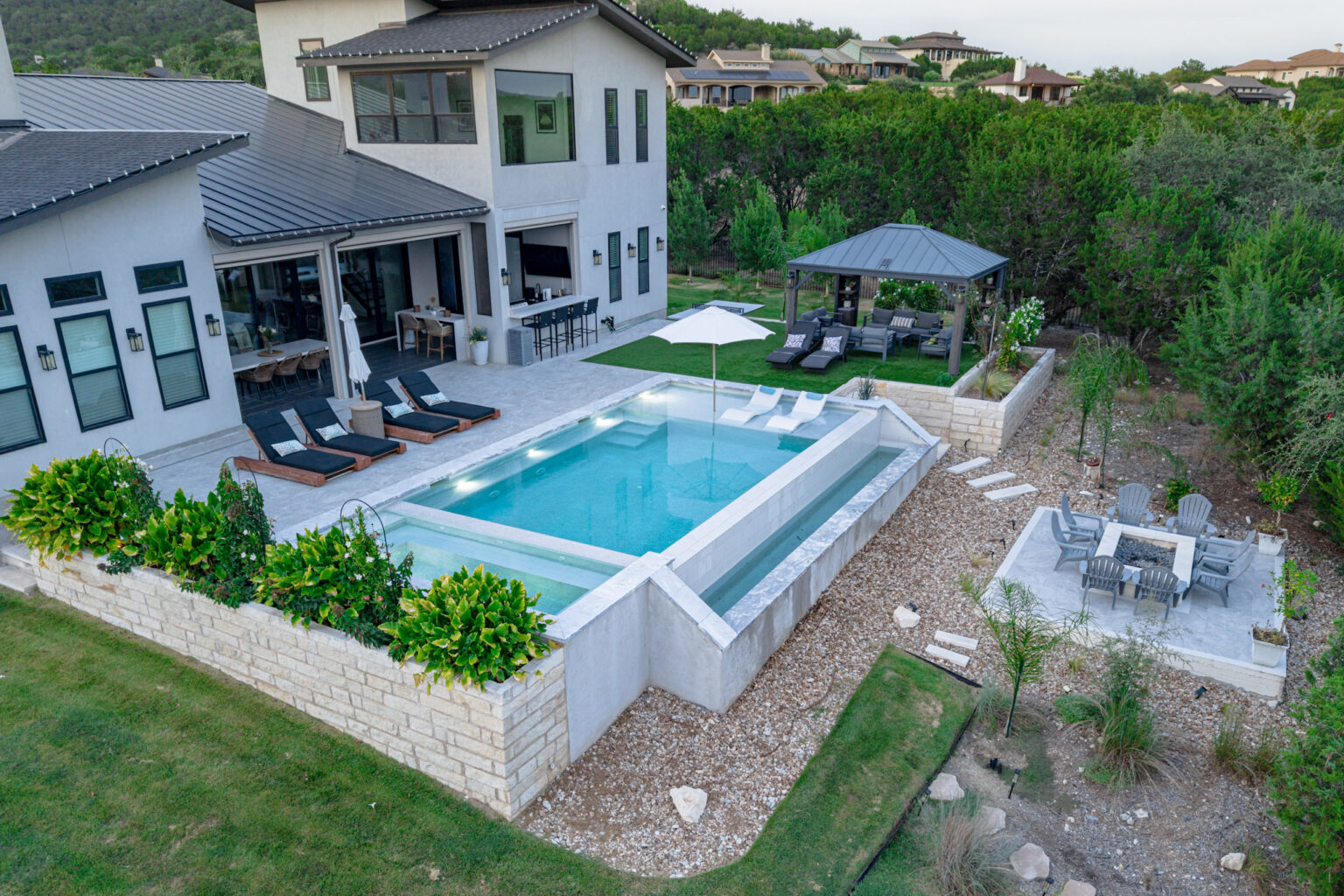
Geometric pools feature defined shapes, straight lines, and clean angles. Common designs include rectangular, square, and L-shaped pools.
Their structured appearance makes them a natural fit for contemporary homes, minimalist landscaping, and outdoor spaces with strong architectural lines. Geometric pools can also create a natural visual connection between the house, patio, and surrounding landscape.
Why choose a geometric pool?
- Creates a clean, timeless architectural appearance.
- Works well with modern homes and structured landscaping.
- Can accommodate dedicated swimming lanes or open swimming areas.
- Pairs naturally with tanning ledges, integrated spas, and linear water features.
A rectangular pool with an attached spa and a spacious patio, for example, can create an elegant outdoor living space without overwhelming the home’s architecture.
Best for: Homeowners who prefer modern design, defined shapes, and a clean, organized backyard layout.
2. Freeform Pools: Best for Natural-Looking Outdoor Spaces
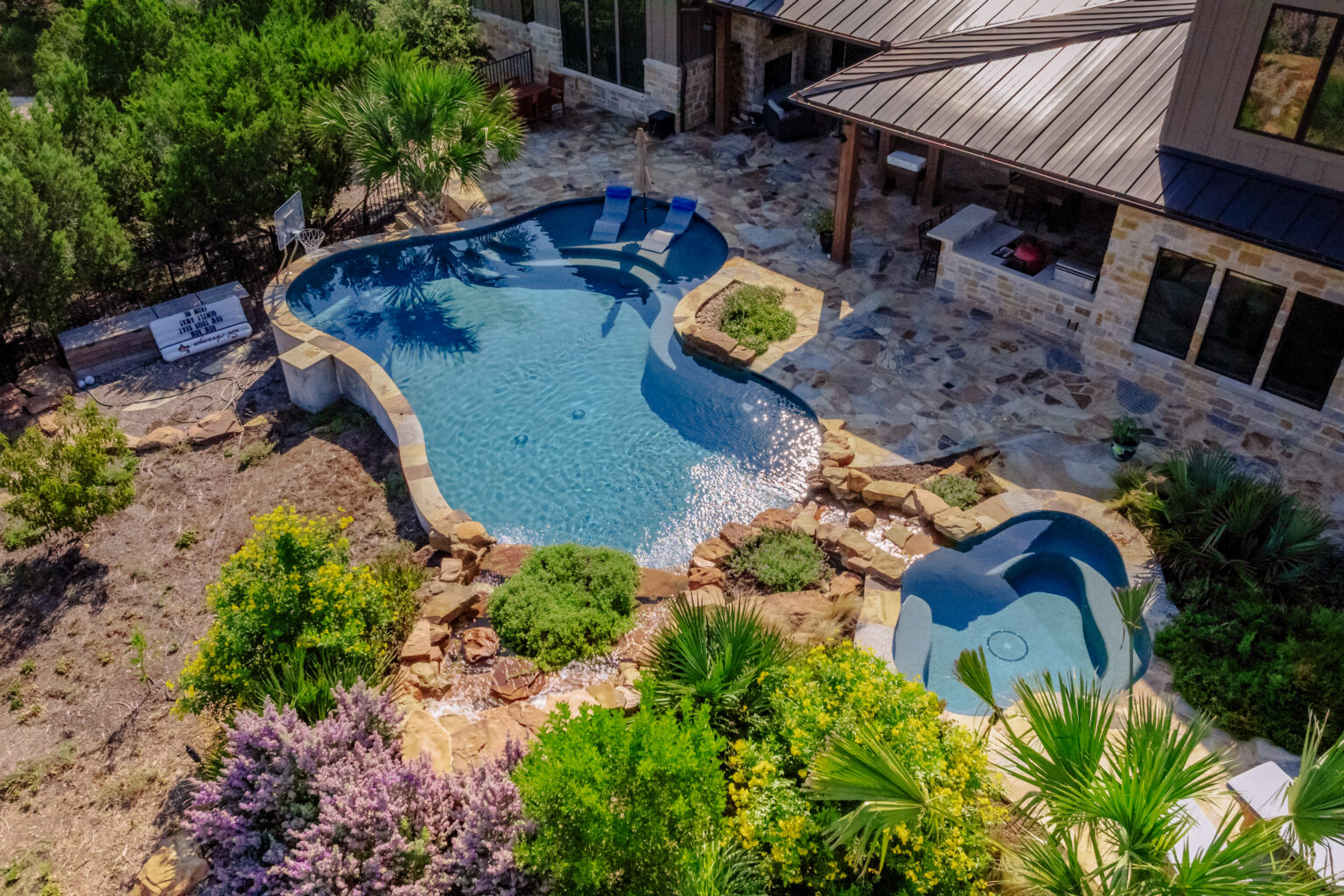
Freeform pools feature curved edges and flowing shapes that create a more organic appearance. Rather than following strict geometric lines, these designs can work with the contours of the property and surrounding landscaping.
They are particularly appealing to homeowners who want their backyard to feel like a private retreat. Natural stone, lush landscaping, cascading waterfalls, and strategically placed boulders can enhance the effect.
Why choose a freeform pool?
- Creates a softer, more organic appearance.
- Complements natural landscaping and curved garden beds.
- Offers flexibility when designing around existing outdoor features.
- Works well with rock waterfalls, grottos, and tropical-inspired settings.
A freeform pool surrounded by layered landscaping and a cascading water feature can transform an ordinary backyard into a relaxing escape.
Best for: Homeowners who prefer natural shapes, resort-inspired environments, and a more relaxed outdoor atmosphere.
3. Small or Compact Pools: Best for Limited Backyard Space
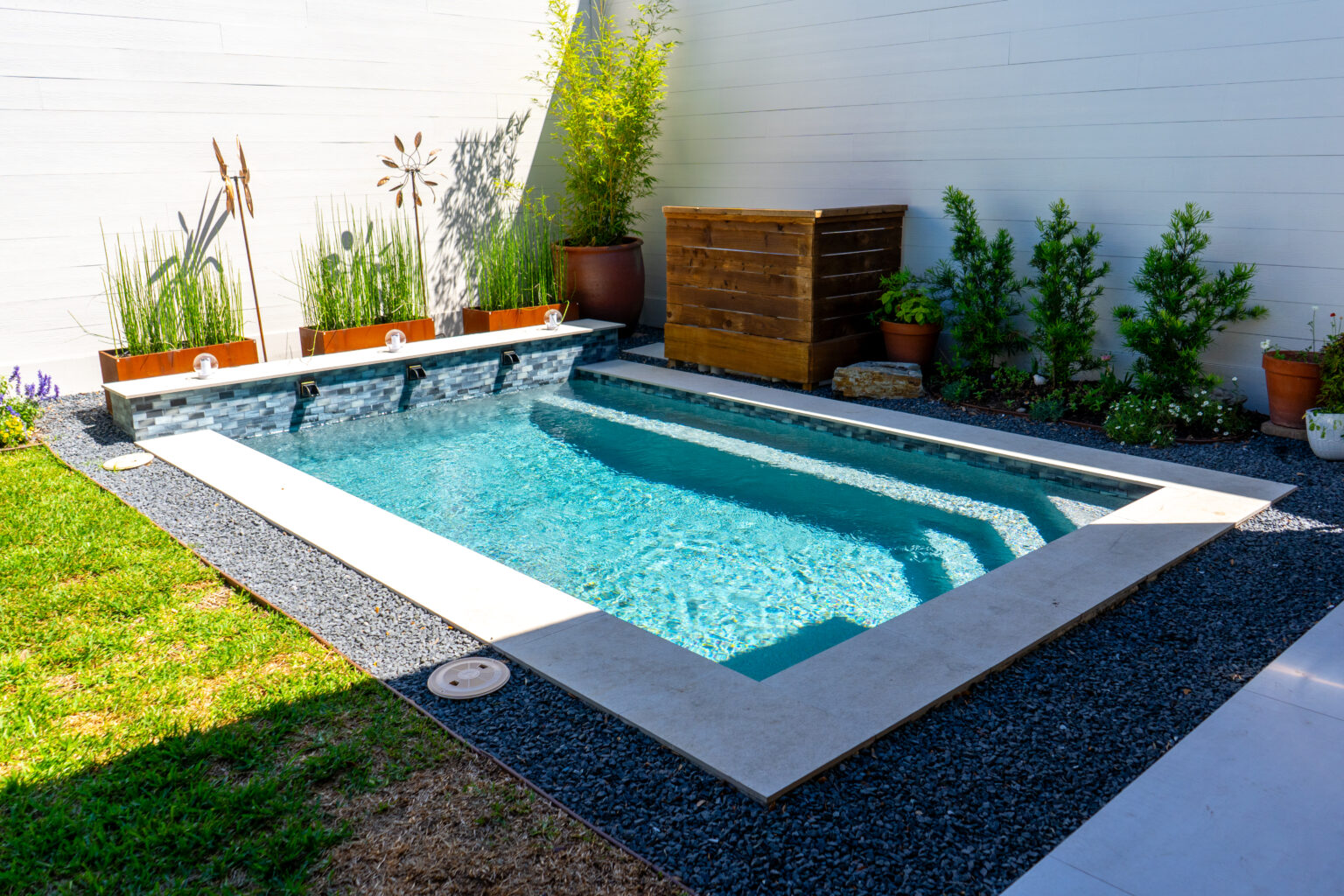
A smaller backyard doesn’t necessarily mean giving up on a custom swimming pool. Compact designs can provide a place to cool off, relax, and entertain without requiring a large portion of the property.
Geometric shapes are often a practical choice for smaller spaces because their defined footprints can make planning easier. However, the best layout depends on property dimensions, setbacks, access, and other site conditions.
Why choose a compact pool?
- Makes efficient use of limited backyard space.
- Can leave room for seating, landscaping, or an outdoor dining area.
- Can incorporate premium features in a smaller footprint.
- May reduce the amount of space dedicated to pool decking and surrounding hardscape.
Features such as a tanning ledge, bench seating, or a compact attached spa can add functionality without requiring a sprawling pool design.
Best for: Homeowners with smaller lots who want to balance swimming and relaxation with other outdoor living priorities.
4. Family-Friendly Pools: Best for Recreation and Everyday Enjoyment
For households that envision their pool as the center of family activities, the layout should prioritize how everyone will use the space.
A family-friendly pool may feature a shallow lounging area, a tanning ledge, open swimming space, or different depth zones designed around the household’s needs. The goal is to create a versatile environment for play, relaxation, and spending time together.
Why choose a family-focused design?
- Can accommodate different activities within one pool.
- Provides opportunities for lounging and open swimming.
- Can incorporate seating areas for adults and shallow areas for supervised play.
- Offers flexibility as family needs change over time.
When planning a family pool, discuss appropriate depths, visibility, entry and exit points, and safety features with your pool designer. Shallow areas and tanning ledges are not substitutes for active supervision or appropriate barriers.
Best for: Homeowners who want a versatile backyard gathering place for everyday family use and entertaining.
5. Lap Pools: Best for Fitness and Swimming
Lap pools are designed primarily for swimming exercise. Their long, relatively narrow shape provides a dedicated area for swimming back and forth, making them appealing to homeowners who want to incorporate fitness into their outdoor space.
Although rectangular designs are common, the ideal dimensions depend on the available property, intended workouts, and personal preferences.
Why choose a lap pool?
- Provides dedicated space for swimming exercise.
- Offers a straightforward, functional layout.
- Can complement contemporary landscaping and architecture.
- May fit along the side of a property or within a narrow backyard, depending on site requirements.
Homeowners interested in swimming workouts should discuss the intended pool length, depth, and circulation with their designer. For some properties, a compact pool with a suitable counter-current swimming system may be another option.
Best for: Homeowners who prioritize swimming, exercise, and a functional design over elaborate recreational features.
6. Resort-Style Pools: Best for Luxury Outdoor Living
Resort-style pools focus on creating an immersive outdoor experience. These designs often combine multiple features into a cohesive environment that feels like a private vacation destination.
Depending on the property and homeowner’s vision, a resort-inspired pool may include an integrated spa, tanning ledge, waterfall, fire bowls, dramatic lighting, or expansive lounging areas.
Why choose a resort-style pool?
- Creates a focal point for the entire backyard.
- Combines swimming, relaxation, and entertaining.
- Offers opportunities to integrate water, fire, lighting, and landscaping.
- Can connect the pool to outdoor kitchens, covered patios, and other living spaces.
The most successful resort-style designs balance impressive features with practical circulation, seating, maintenance access, and the overall layout of the property.
Best for: Homeowners who want a more immersive outdoor living environment with space for relaxation, entertaining, and enjoying their backyard.
Which Pool Features Should You Consider?
Once you’ve narrowed down the general pool design, consider which features will make it more enjoyable and functional.
Tanning ledges: These shallow areas provide space for lounging in the water and can accommodate in-water lounge chairs designed for the intended depth.
Spas: An integrated spa adds another way to enjoy the backyard and can create a natural transition between relaxation and swimming areas.
Waterfalls and water features: Cascades, deck jets, and other features add movement and sound while helping establish the pool’s overall aesthetic.
Beach entries: A gradually sloping entry can create a distinctive look and provide a gradual transition into the pool. The appropriate design depends on the property’s space and intended use.
Fire features: Fire bowls and other outdoor fire elements can create a striking contrast with the water and add atmosphere to evening gatherings.
Lighting: Thoughtfully placed pool and landscape lighting can improve visibility and create a more inviting environment after sunset. Lighting should be designed alongside appropriate pool safety measures.
You don’t need to include every available feature. The best design prioritizes the elements that suit your lifestyle, complement your home, and fit your outdoor space.
How Do You Choose the Right Pool Shape for Your Backyard?
If you’re deciding between a geometric, freeform, or compact pool, start by evaluating the property itself.
A geometric pool may be the strongest option when you want defined lines that complement the home’s architecture. A freeform design may work better when you prefer a softer appearance that blends with the landscaping. A compact design can help balance swimming space with a patio, garden, or other outdoor living features.
The shape is only one part of the decision. Your designer should also consider property dimensions, setbacks, drainage, underground utilities, access for construction equipment, and any site-specific engineering requirements.
It is also important to look beyond the pool itself. A design that fills the entire backyard may leave little room for the seating, shade, landscaping, and gathering areas that make the space enjoyable. Planning the pool and surrounding environment together can help create a more balanced result.
What Type of Pool Is Best for Your Lifestyle?
The right pool is ultimately the one that fits the way you want to live.
If you enjoy hosting gatherings, you may prefer an open swimming area with convenient access to outdoor seating. If relaxation is your priority, an attached spa, tanning ledge, or water feature may be more important than maximizing swimming space. If fitness is your primary goal, a dedicated lap pool may make more sense than a design centered on decorative features.
Consider how your needs might change over time, too. A pool that works for young children should also offer flexibility as they grow, while homeowners planning to stay in their homes for many years may prioritize long-term accessibility and ease of maintenance.
A custom design gives you the opportunity to balance these priorities rather than choosing a one-size-fits-all layout.
Design a Custom Pool With Cody Pools
The best swimming pool design starts with your property, your priorities, and your vision for outdoor living. From sleek geometric pools and natural freeform designs to family-friendly layouts and resort-inspired backyards, a thoughtful design can help you get more enjoyment from your outdoor space.
Cody Pools brings experience in designing and building custom swimming pools for homeowners with different properties, lifestyles, and design preferences. Our team can help you explore your options, consider the details that matter most, and develop a design tailored to your backyard.
Ready to start planning? Explore our pool design gallery for inspiration and contact Cody Pools to discuss your custom pool project.
Frequently Asked Questions
What is the most popular swimming pool shape?
Rectangular and other geometric pools are popular choices for their clean appearance and versatility. Freeform pools are also widely used, particularly in backyards designed around natural landscaping or resort-style features. The best shape depends on the property, home architecture, and intended use.
What type of pool is best for a small backyard?
A compact geometric pool is often a practical starting point because its defined footprint can make it easier to plan around patios, landscaping, and property boundaries. The right design depends on the available space, local requirements, and the features you want to include.
Are geometric pools better than freeform pools?
Neither design is universally better. Geometric pools tend to suit structured, contemporary spaces, while freeform pools offer a softer, more organic appearance. Both can be customized with features such as spas, tanning ledges, lighting, and water features.
What type of pool is best for families?
A family-friendly pool should reflect the ages, interests, and needs of the people who will use it. Open swimming space, appropriate depth zones, convenient entry points, and thoughtfully selected features can help create a versatile environment. Active supervision and appropriate safety barriers remain essential.
Can you add a spa or tanning ledge to a custom pool?
Yes, an attached spa or tanning ledge can be incorporated into many custom pool designs. Feasibility depends on the available space, layout, engineering, and other project requirements, so these features should be discussed during the design process.
How do you know which pool design will fit your property?
Start by evaluating the usable backyard area, property setbacks, access, drainage, and existing structures. A custom pool designer can help assess these factors and develop a layout that balances swimming space with decking, landscaping, and outdoor living areas.
Should you design your pool and outdoor living space together?
Yes. Planning the pool alongside patios, shade structures, landscaping, outdoor kitchens, and seating areas helps create a cohesive backyard. It can also make it easier to coordinate circulation, utilities, and construction requirements before work begins.